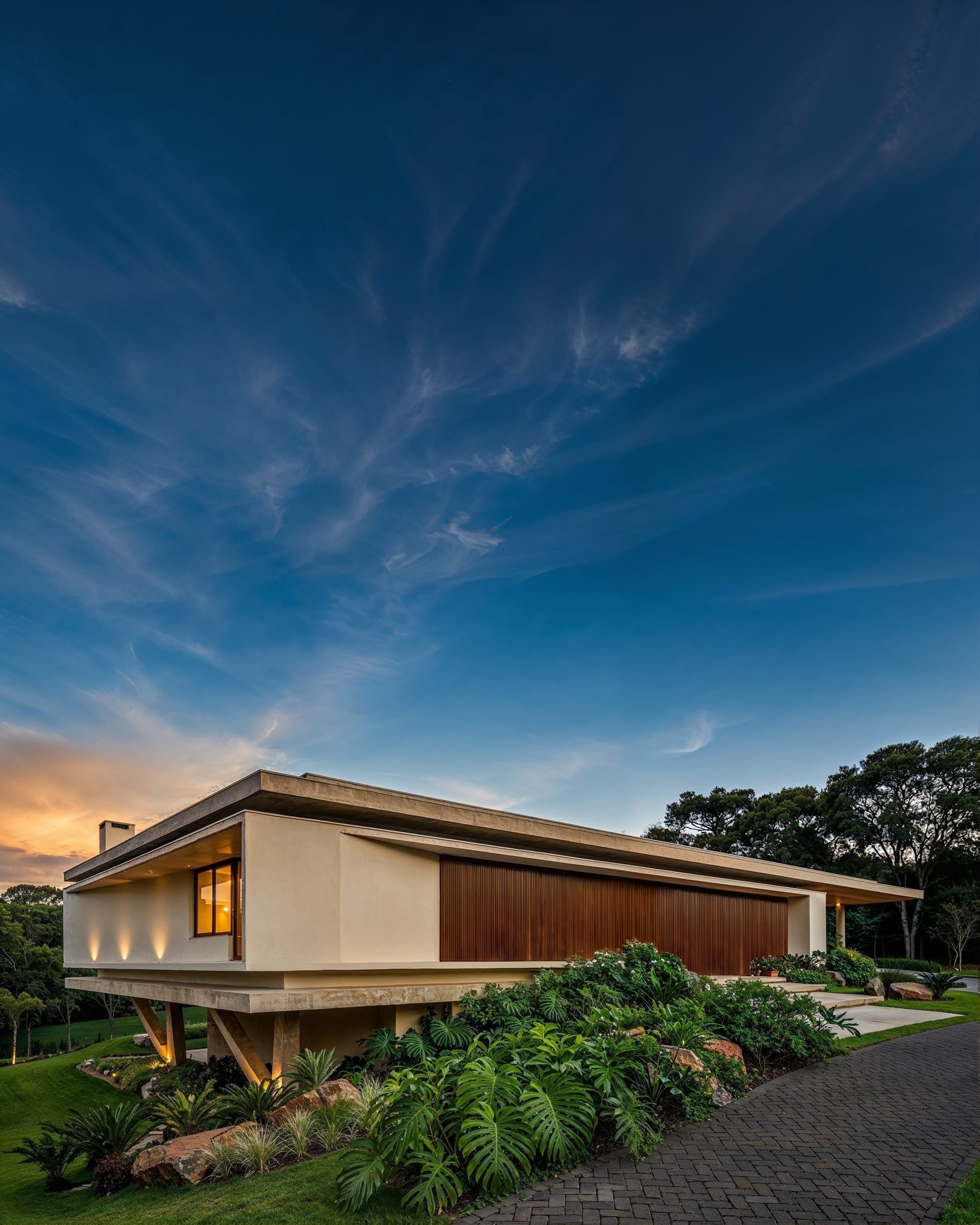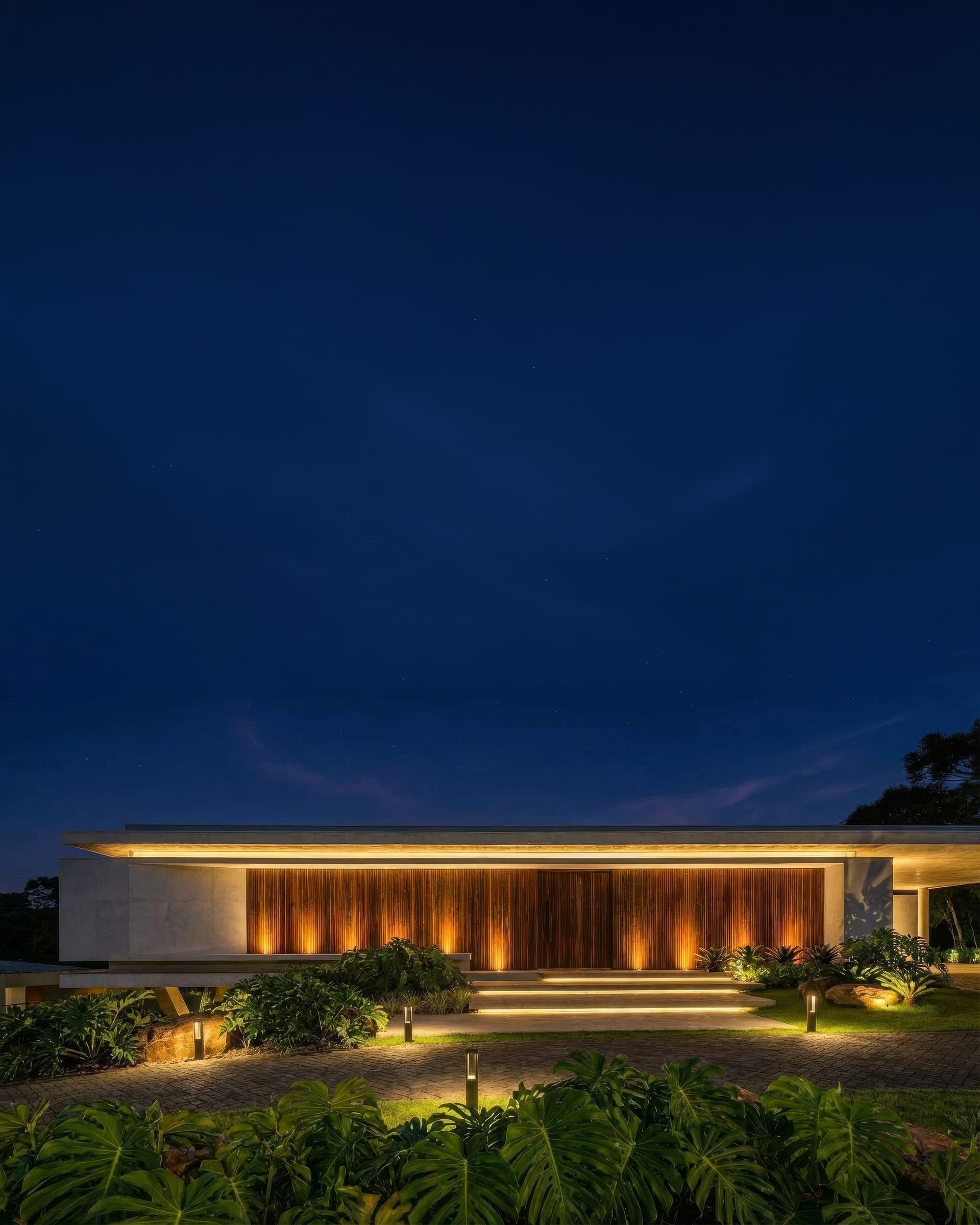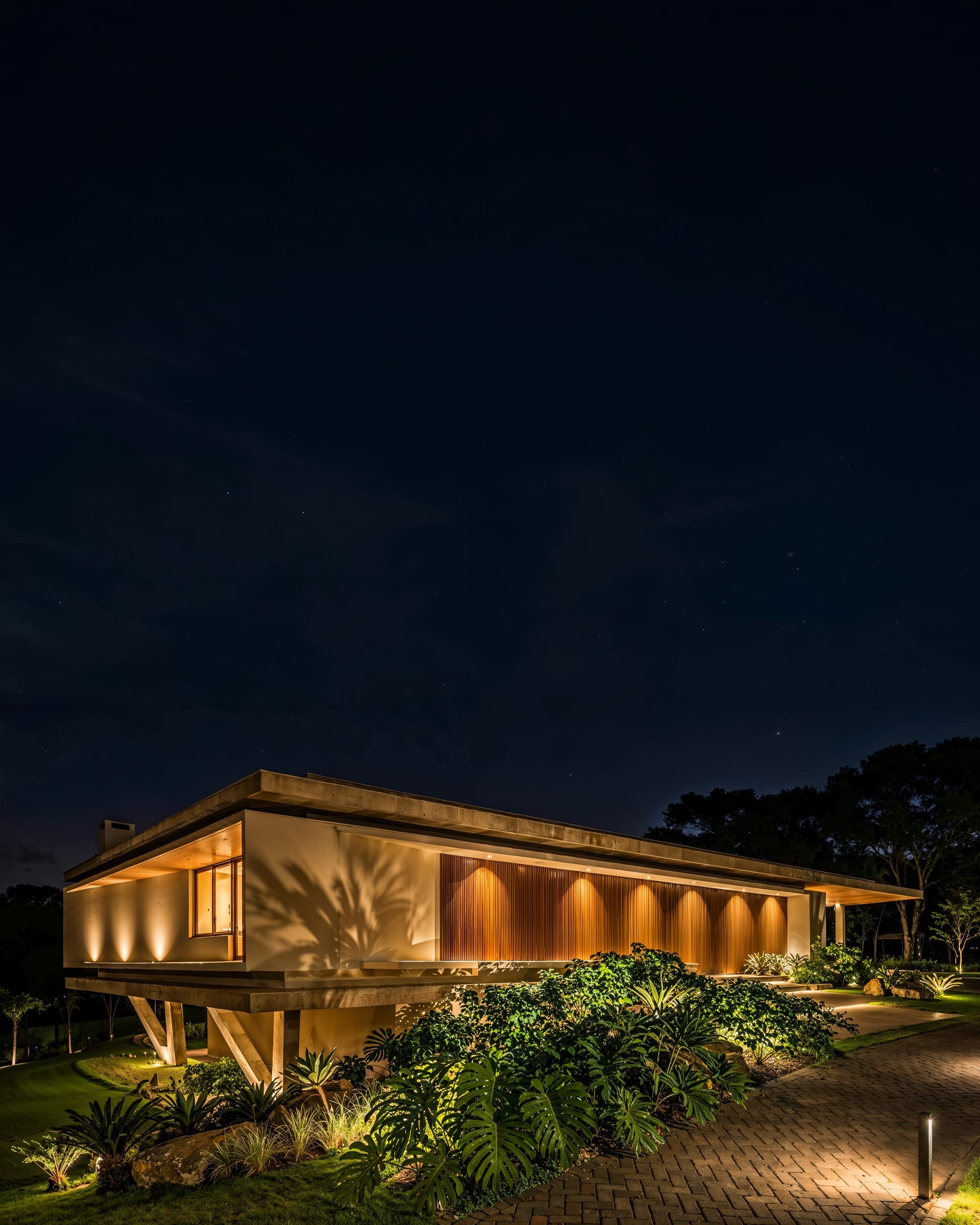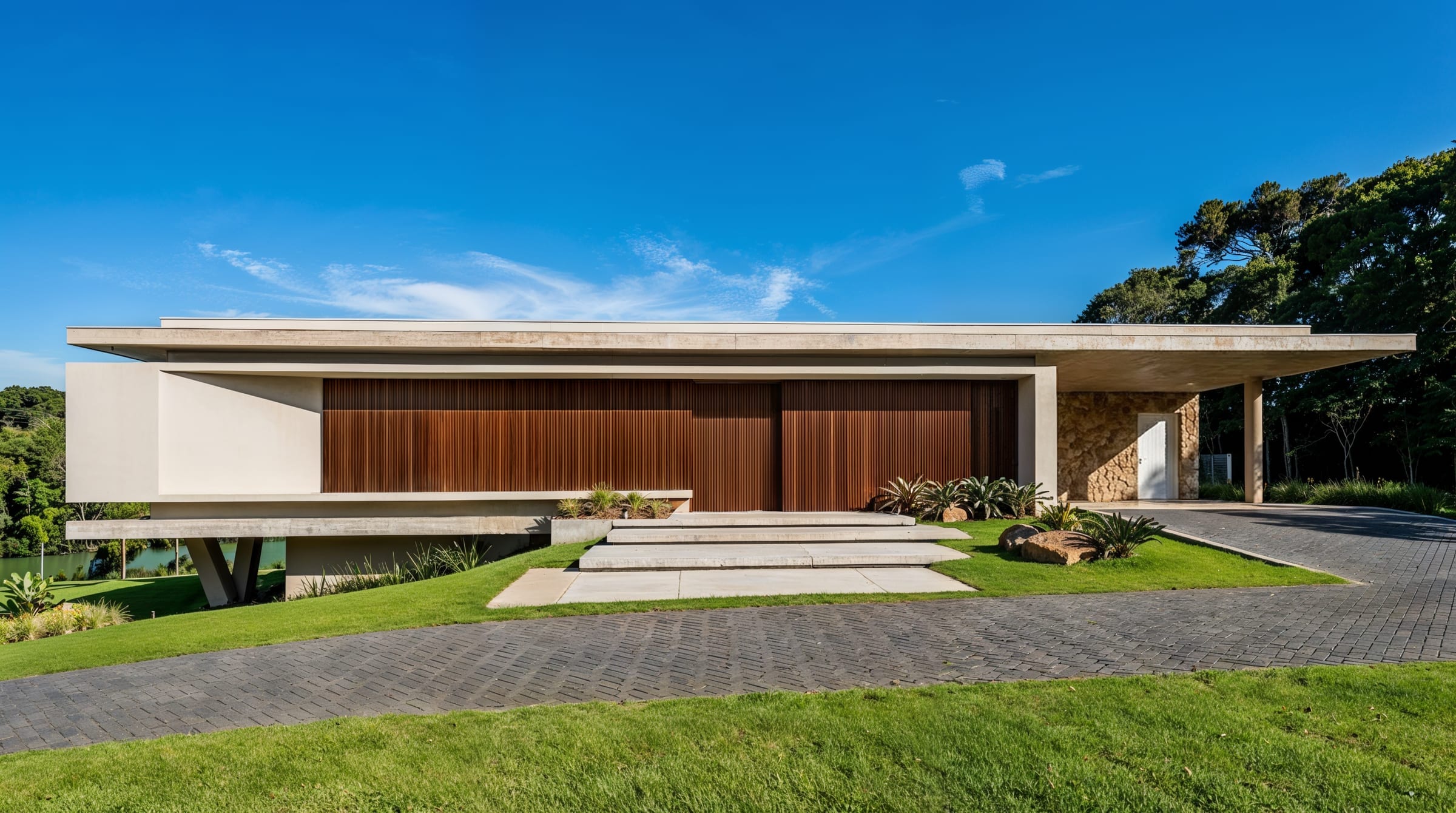
Aruá is a name of origin. It carries the root of the land and the gesture of those who belong to the place. Architecture listens to the terrain before drawing itself, and finds in Brazilian matter its language.
The site in Curitiba is generous — about 1,600 to 1,800 m², with broad dimensions, privileged views to the back, and ideal sun-exposure conditions in the same orientation. The reading of this context guided the project's central directive: to maximize the relationship between house, natural light, and landscape. The clients' brief asked for a single-story residence with controlled metrics close to 420 m² — instead of expanding vertically, the project explores the horizontality of the lot, organizing the program efficiently and integrally.
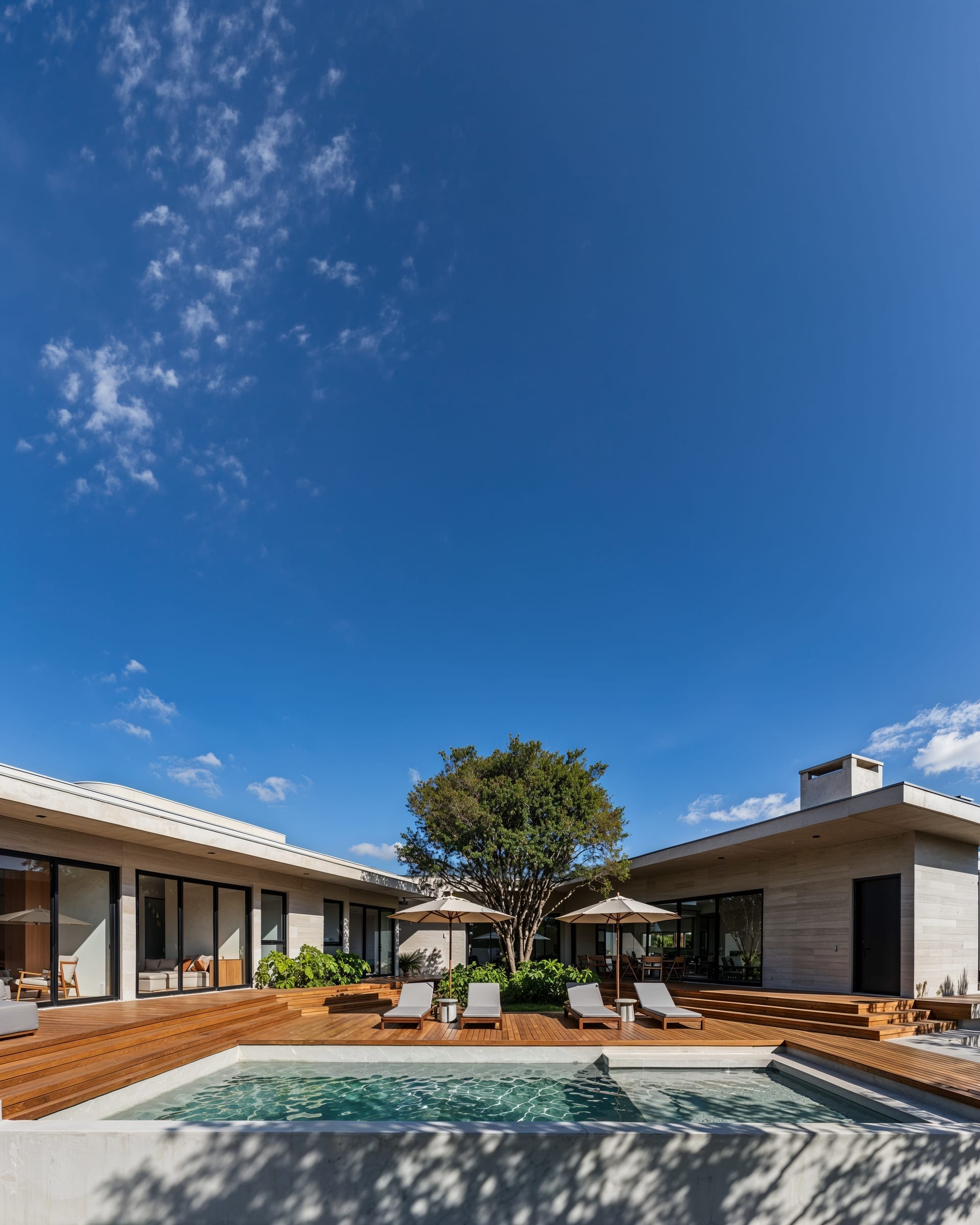
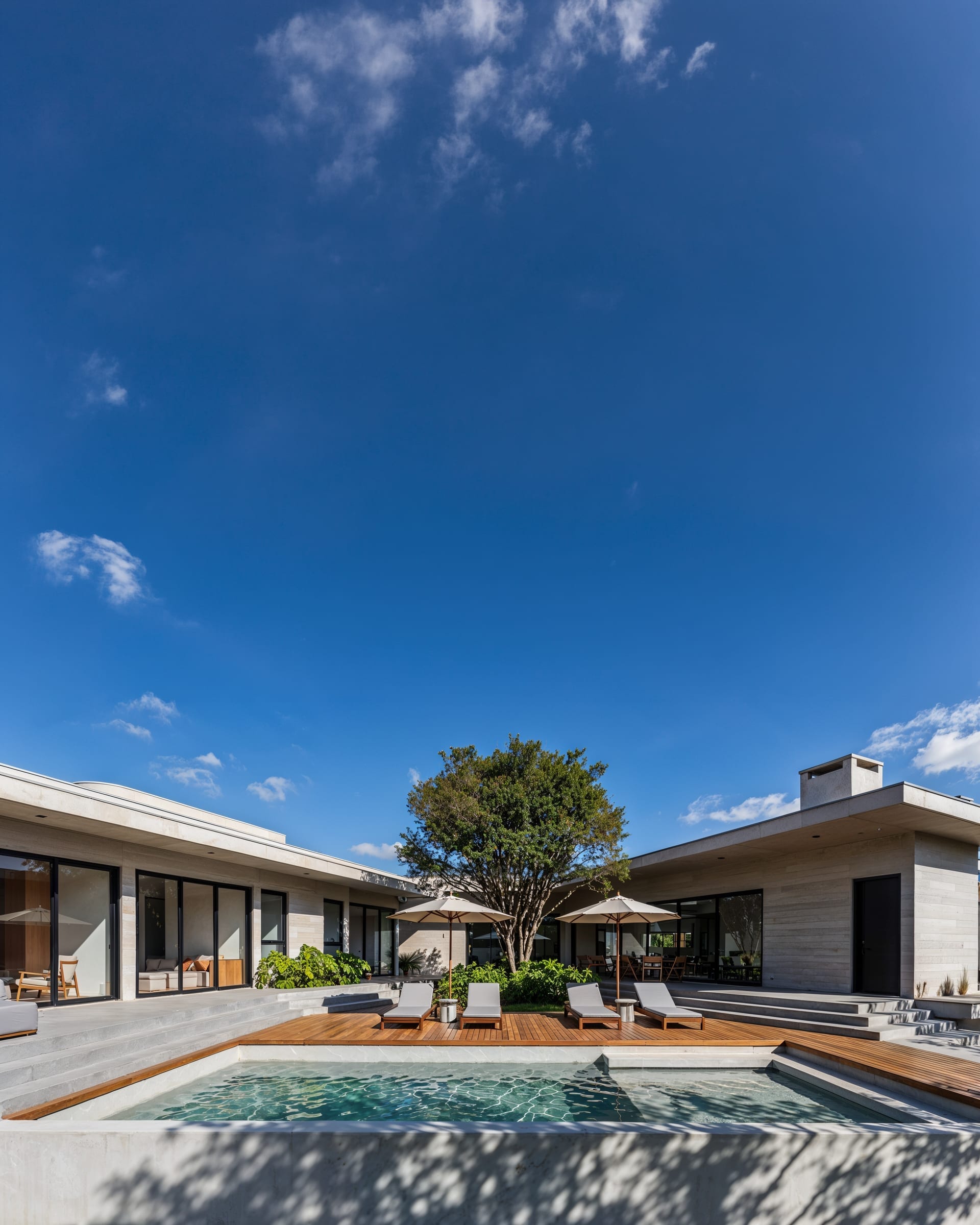
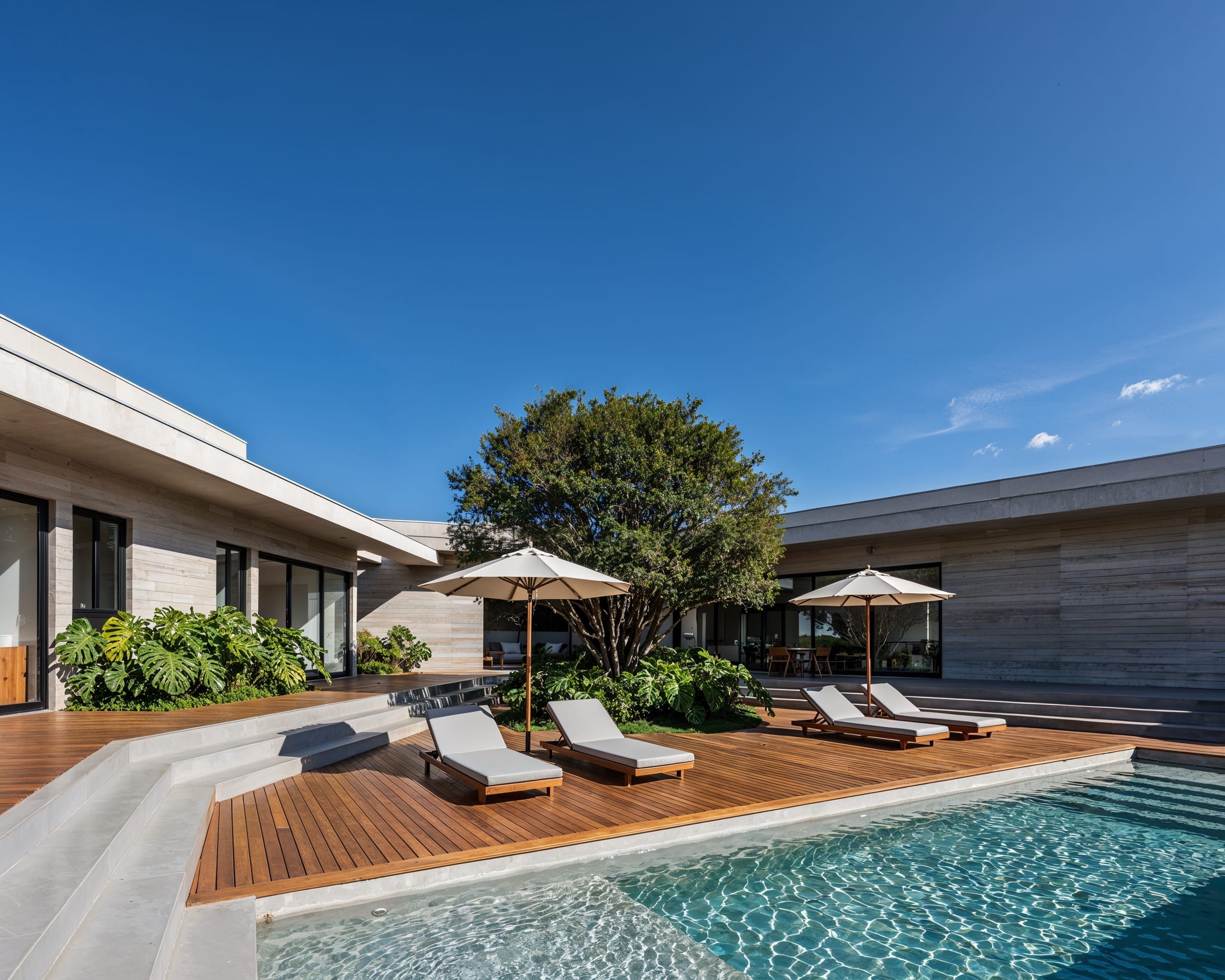
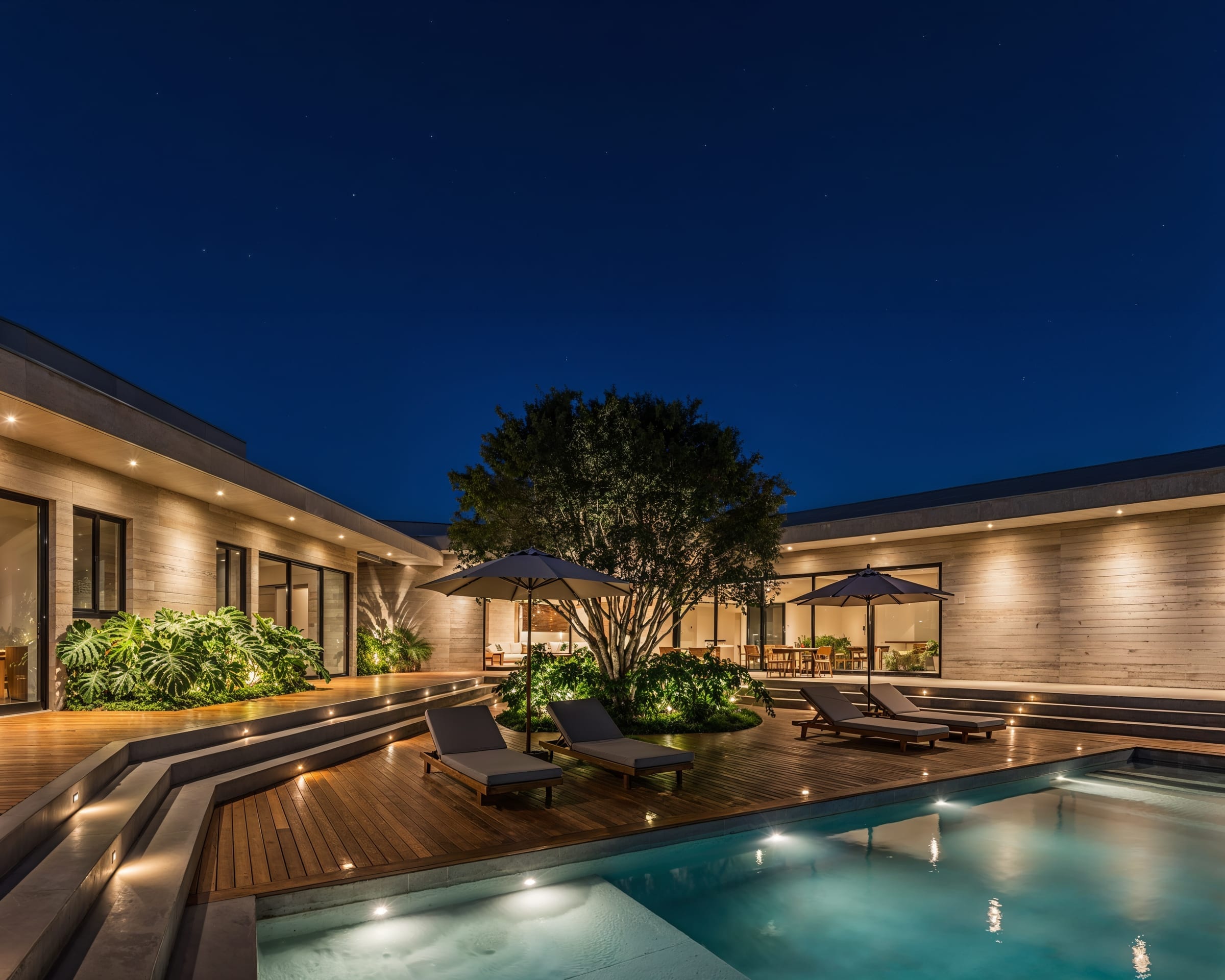
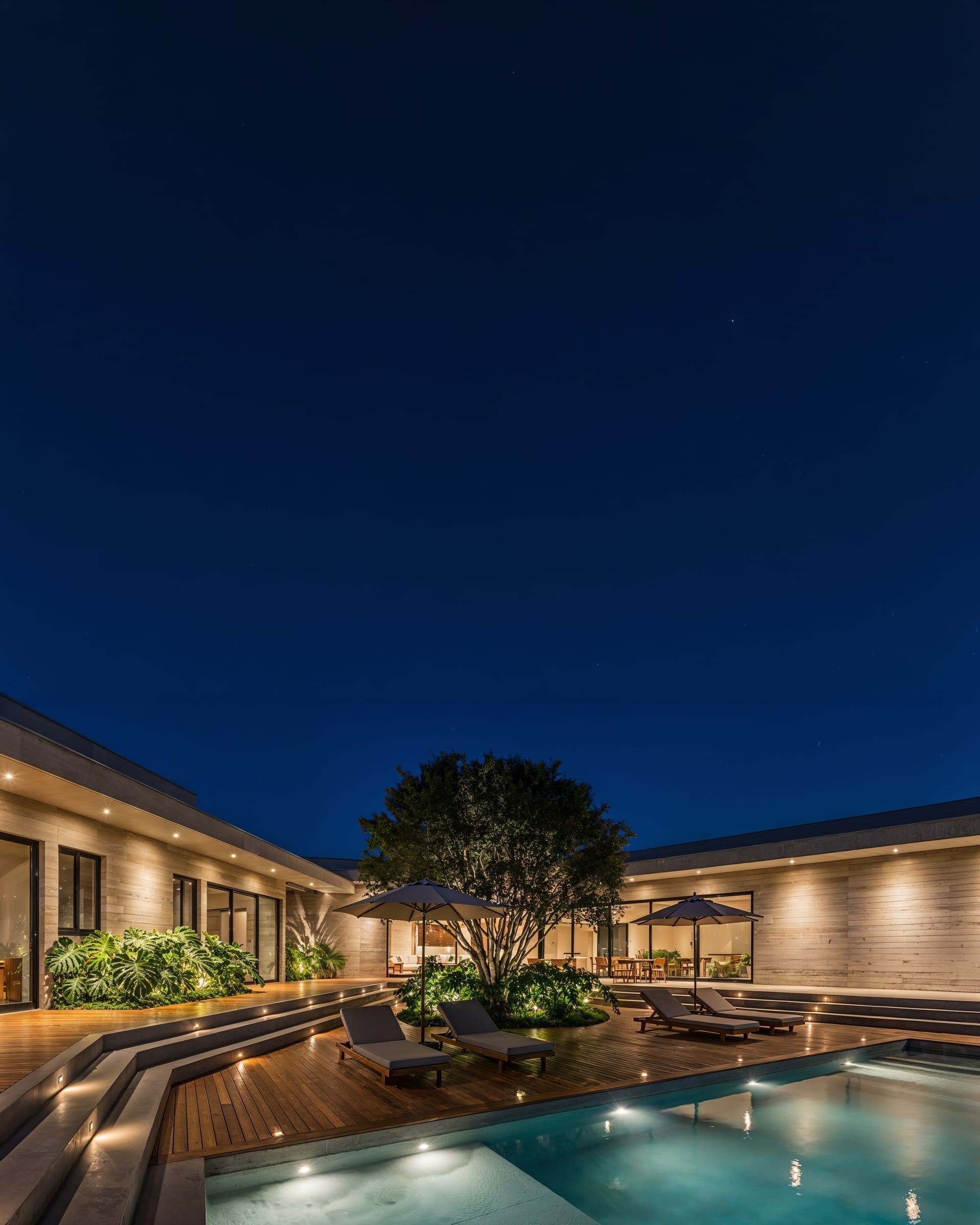
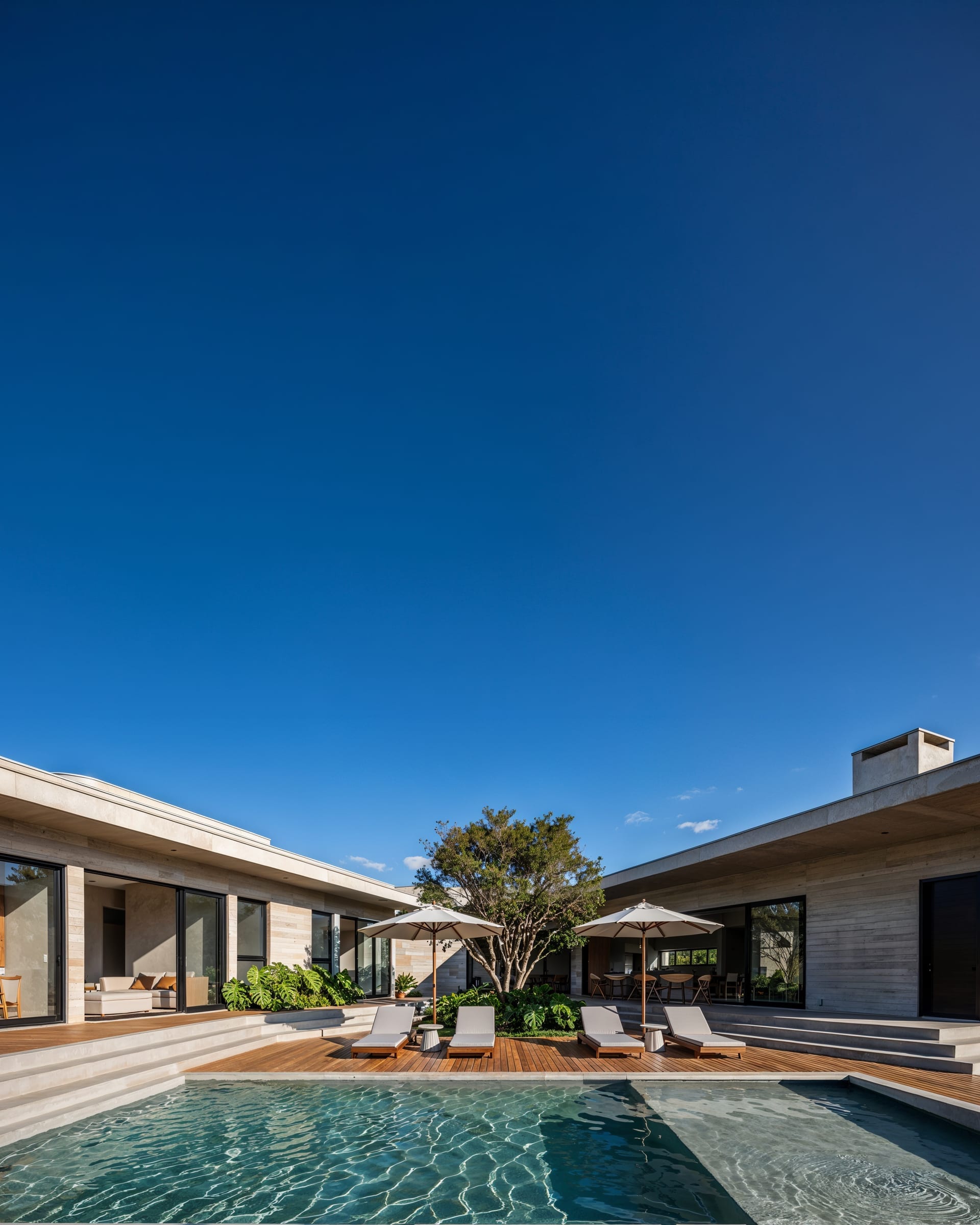
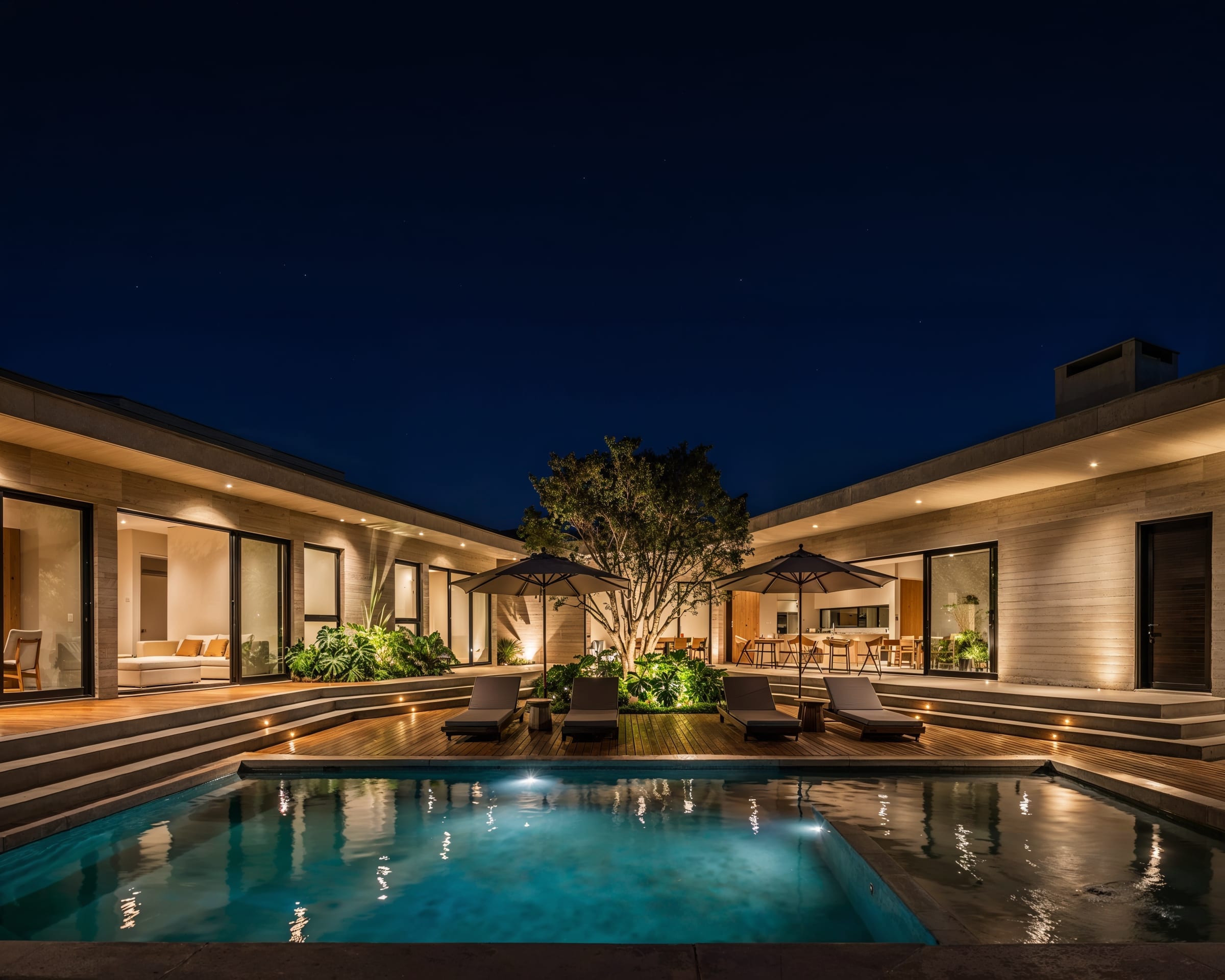
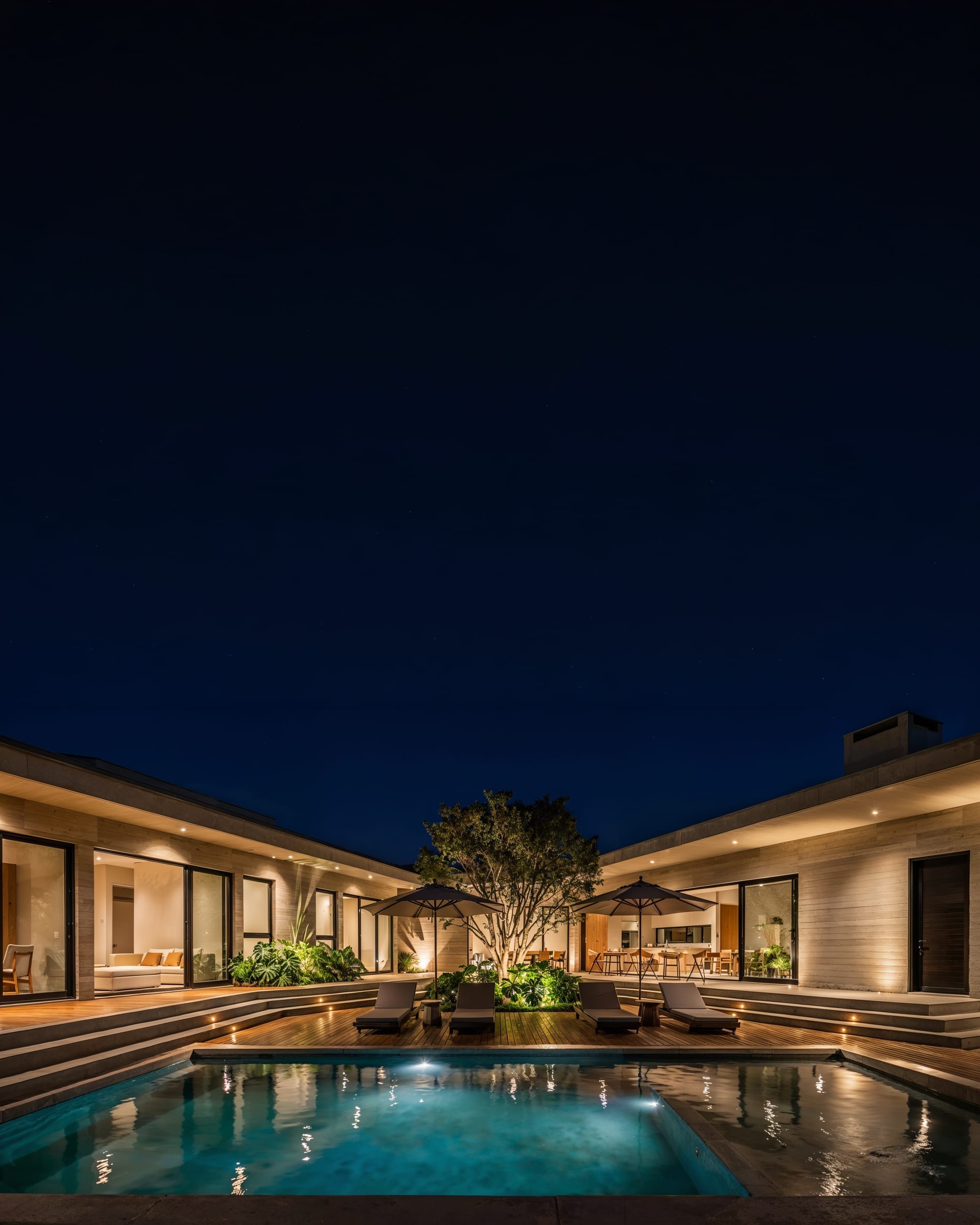
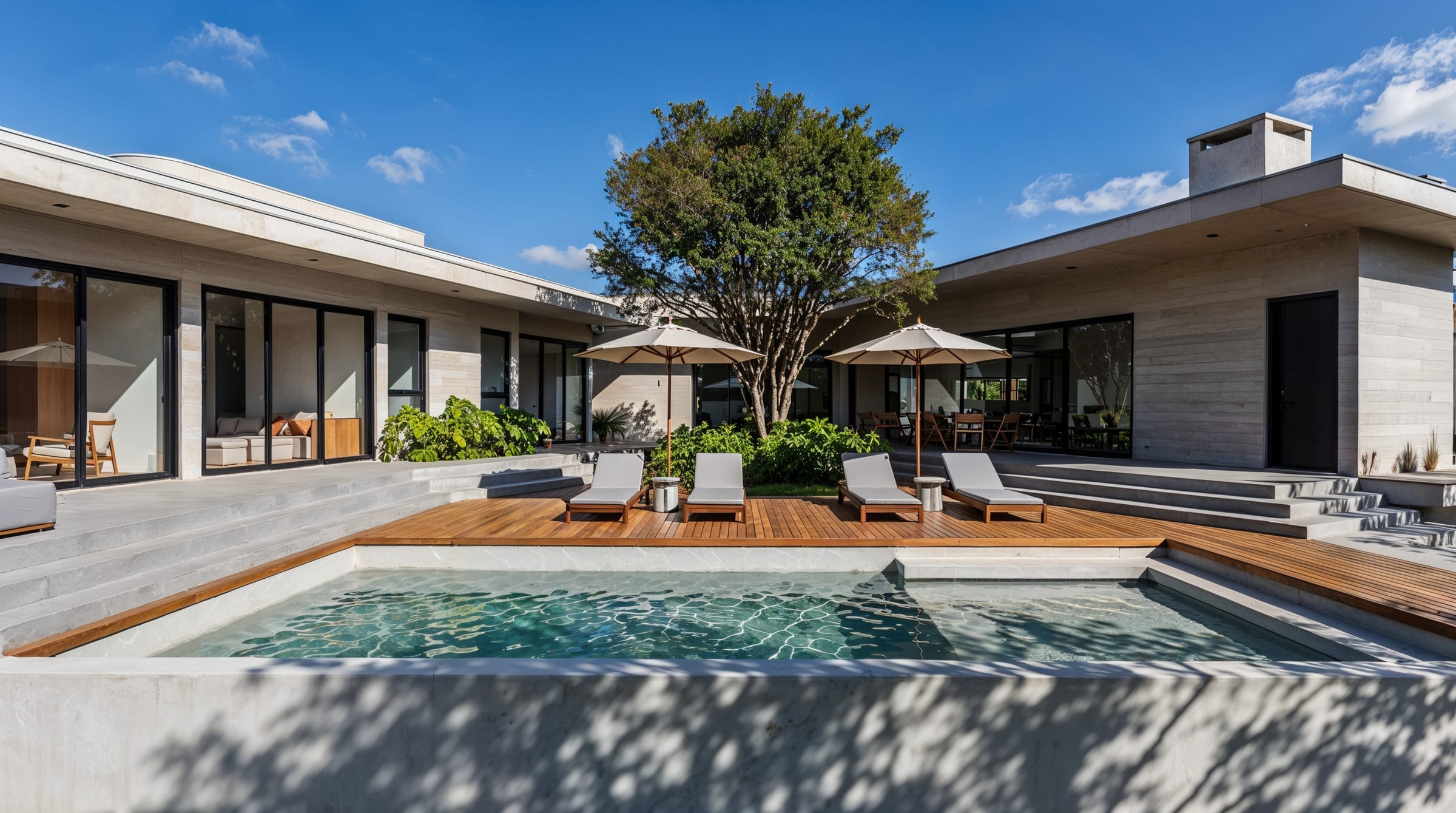
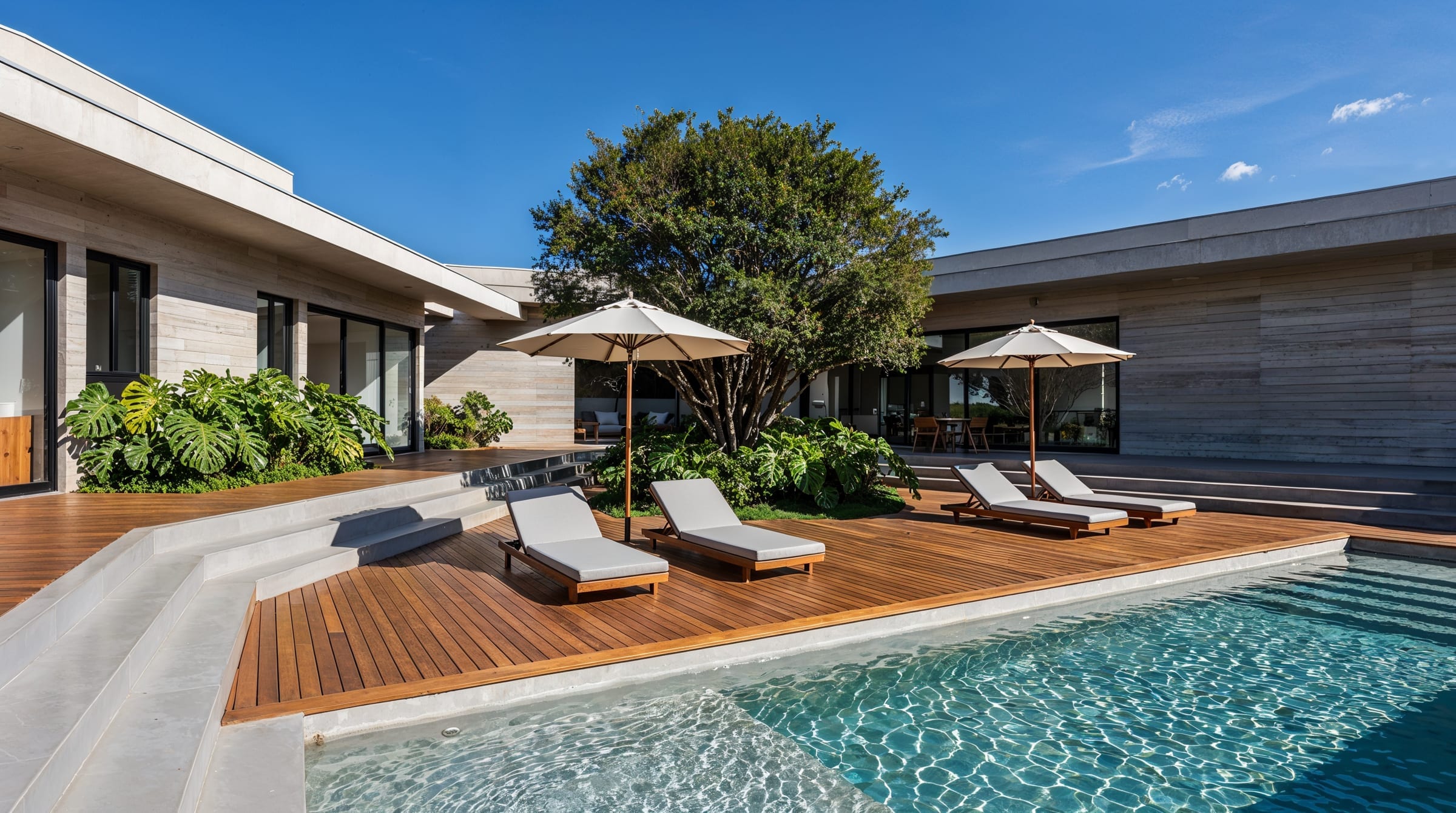
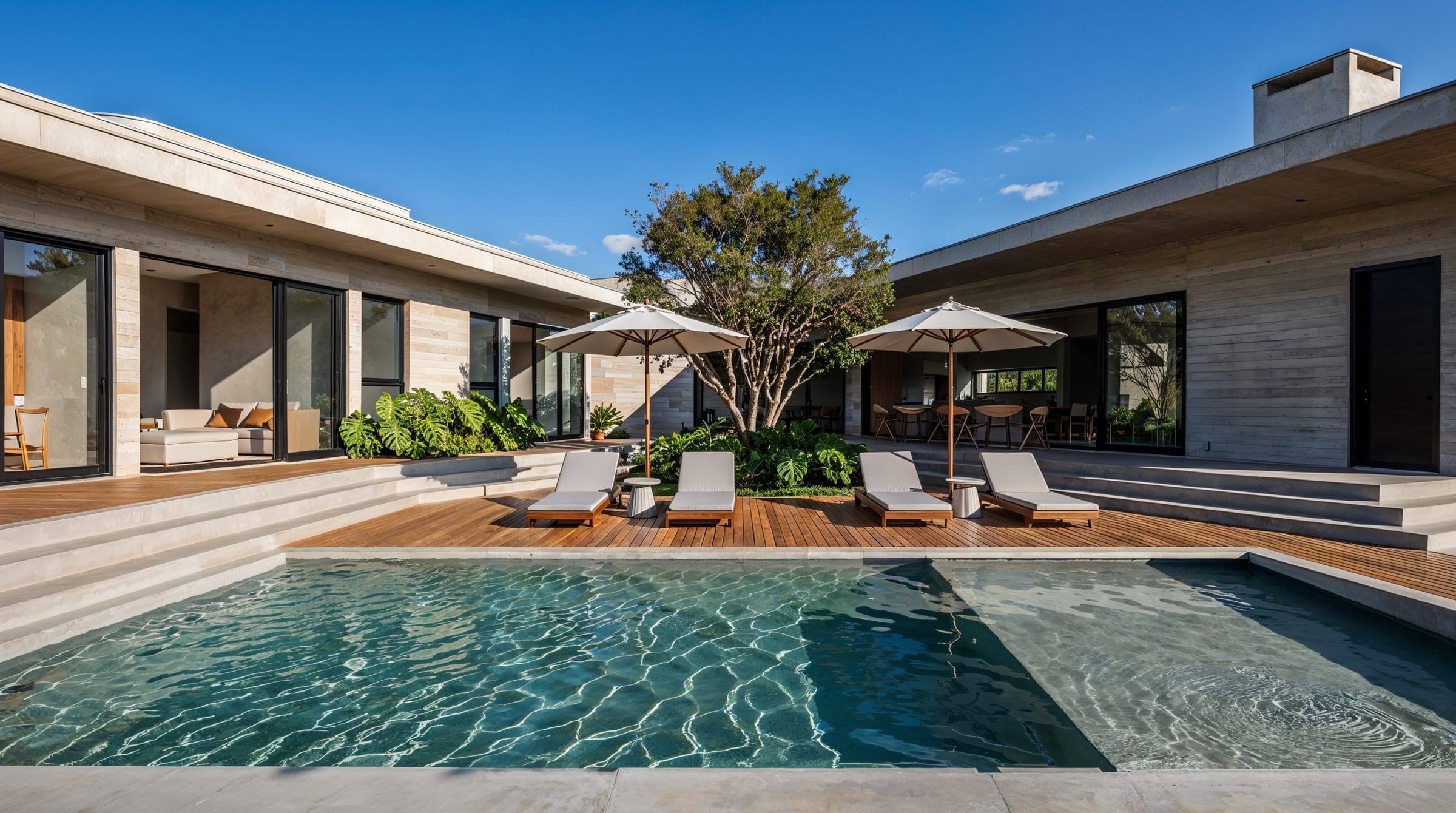
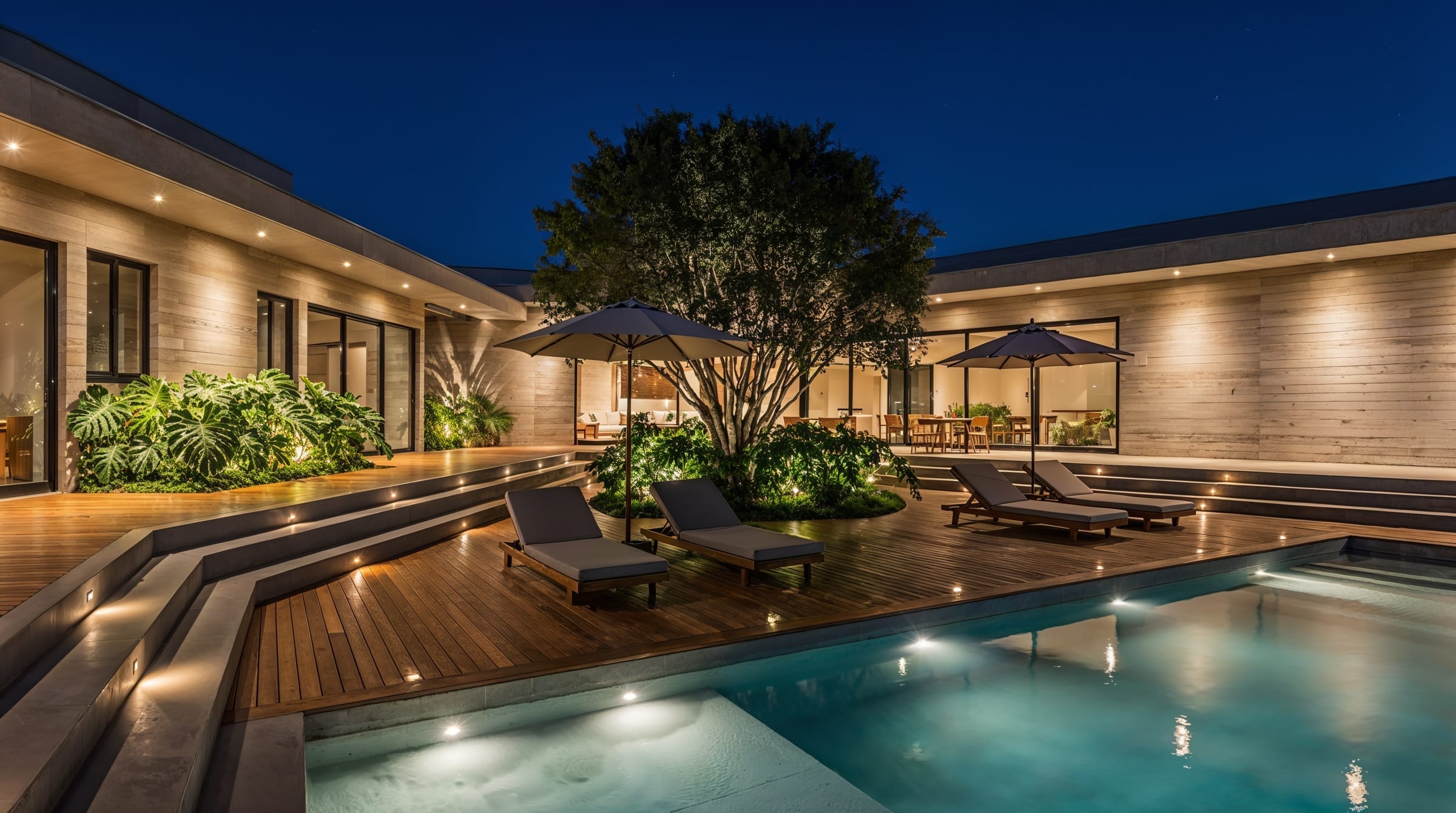
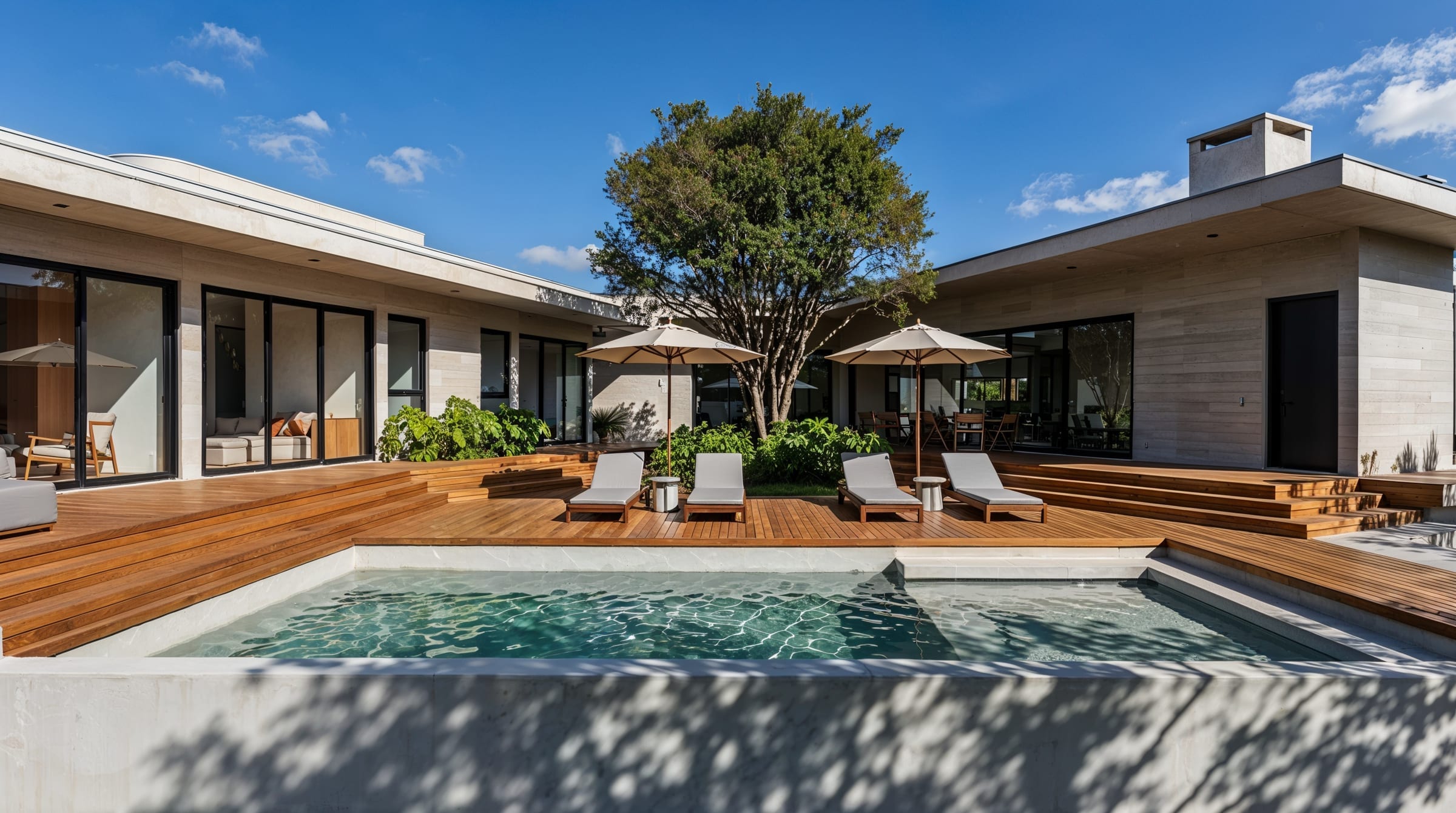
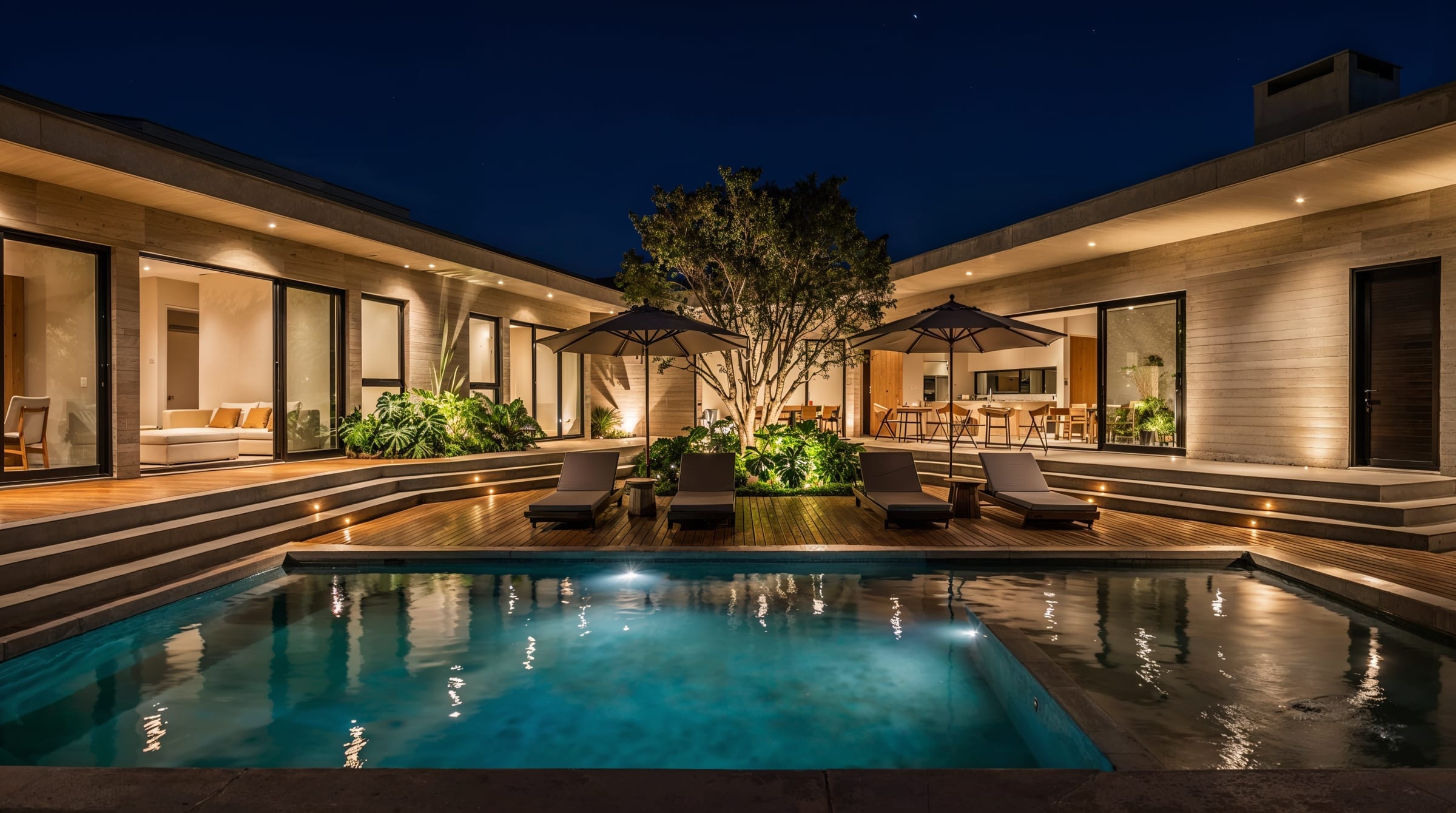
The design is structured around a central courtyard — the organizing element of the entire residence. All main rooms turn toward this internal space, ensuring qualified views and a direct relationship with the exterior and the lot's best solar orientation. The courtyard functions simultaneously as a gathering nucleus and an environmental regulator, promoting thermal comfort and abundant natural light. Formally, the house approaches a "V" configuration: two arms embracing the courtyard and structuring the distribution of spaces, while maintaining continuous visual connection with the garden, pool, and leisure area.
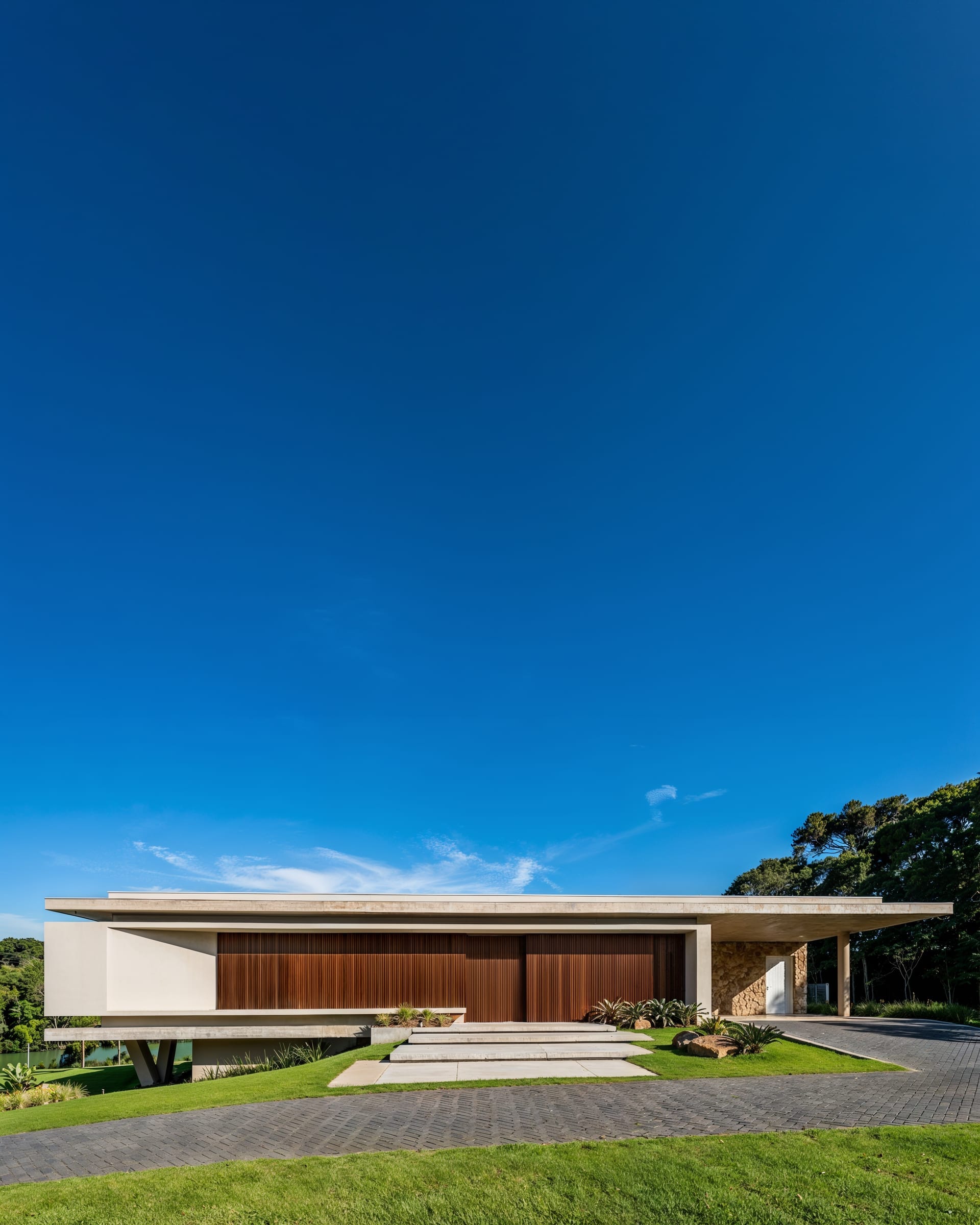
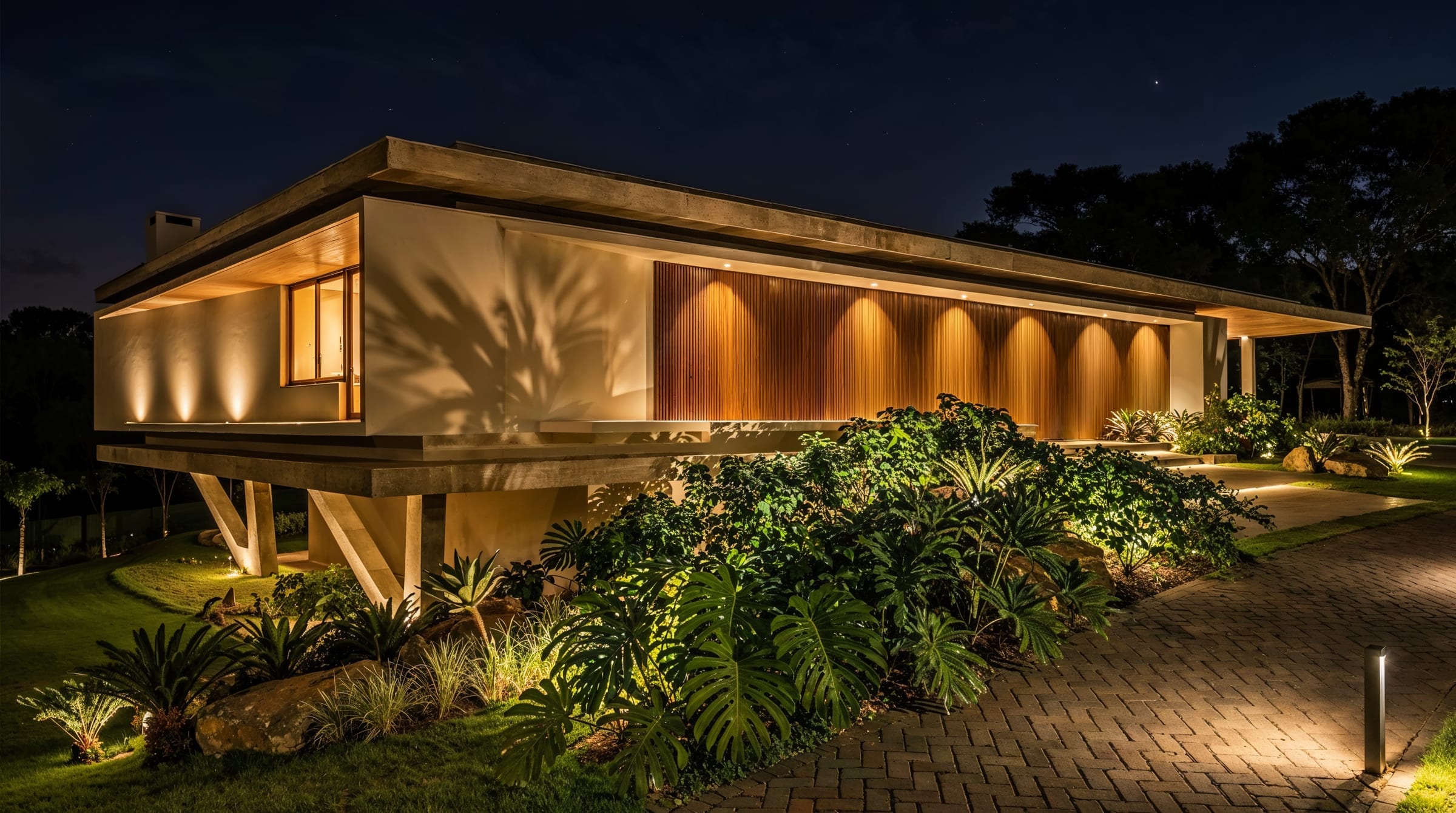
The street-facing façade is treated reservedly, with clean and controlled language — privacy in daily life. In counterpoint, the house opens fully to the interior of the lot, creating an atmosphere geared to relaxation, conviviality, and family life. More specific spaces — wine cellar and atelier — are positioned in the basement, freeing the main floor for fluid and integrated living. Materiality and formal language dialogue with Brazilian modernism: pure lines, balanced proportions, essential aesthetics.
Across the 420 m² distributed between ground floor and functional basement, Casa Aruá builds itself as a refuge turned inward — where architecture, landscape, and way of living align. A house that closes to the street and opens to life, translating into built form an essentially Brazilian idea of dwelling.